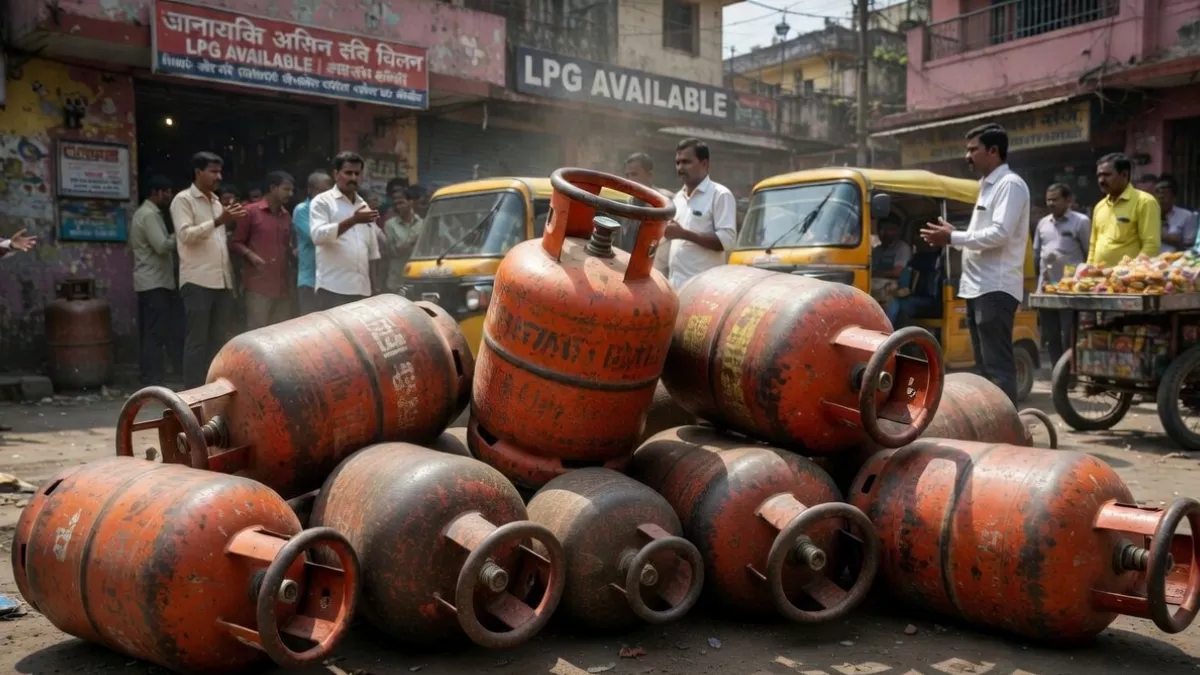
A severe shortage of LPG cylinders has disrupted restaurants, hotels, and households across several Indian cities, with the hospitality sector bearing the brunt of supply disruptions triggered by the ongoing conflict in West Asia. Cities including Mumbai, Bengaluru, Kolkata, Chennai, and Delhi are experiencing irregular supplies of commercial LPG cylinders, forcing establishments to scale down operations or temporarily shut down as cooking gas becomes increasingly difficult to procure.
Commercial Sector Crisis
Also Read




The shortage has hit the hospitality industry particularly hard, with restaurant associations across multiple states warning of imminent closures if supplies are not restored quickly. Commercial LPG supplies have largely stopped since Sunday, March 8, leaving hotels and eateries scrambling for alternatives.
According to the Hotel Owners Association of Mumbai (AHAR), approximately 8,000 hotels in the city are affected by the crisis. The organization claims that approximately 20 percent of hotels have already closed, and if the supply of commercial gas cylinders does not return to normal in the next two to three days, approximately 4,000 to 5,000 more hotels could close.
In Bengaluru, distributors confirmed that although they currently have stock for the next four days, they have stopped supplies because oil companies did not refill commercial LPG cylinders on Monday. Reports have also emerged that some distributors are selling cylinders in the black market for up to Rs. 3,000, compared to the regular price of Rs. 1,950 per cylinder.
The National Restaurant Association of India (NRAI) stated that the restaurant industry could face losses of around Rs. 1,200 to Rs. 1,300 crore per day if the disruption continues. Approximately 70 to 75 percent of restaurants across India depend on LPG for their operations, with over 500,000 restaurants represented by the association. The industry generates an annual turnover of over Rs. 5.7 trillion and employs over 8 million people.
In Tamil Nadu, the Chennai Hotels Association warned that nearly 10,000 establishments will shut down by Wednesday across the state, affecting the majority of small and medium-sized restaurants.
Domestic Supply Disruptions
While the commercial sector faces the most severe impact, domestic consumers are also experiencing delays. Residents are now facing delivery delays ranging from two to eight days after booking, a significant shift from the previous system where refills could be ordered within 48 hours. The government has introduced a new 25-day inter-booking period for domestic LPG refills, extending the cycle from the earlier 21-day standard.
Long queues of customers for LPG domestic gas were seen in Sambhaji Nagar, where residents of the MIDC Waluj area in Chhatrapati Sambhajinagar district are standing in queues under the scorching sun. The sudden crisis has caused panic among households, with consumers who have double domestic connections rushing to book refills, leading to extended wait times at dealer outlets.

Price Hikes Compound the Crisis
Adding to the challenges, LPG cylinder prices were recently increased across the country. On Saturday, March 7, the price of a 14.2-kg domestic LPG cylinder was hiked by Rs. 60, bringing the price in Delhi to Rs. 913. The 19-kg commercial LPG cylinder used by hotels and restaurants went up by Rs. 114.50, following an earlier Rs. 28 increase on March 1, taking the total commercial LPG hike in 2026 to Rs. 302.50.
Market watchers suggest that if the military action continues, domestic cylinder prices in India could hit Rs. 1,000, which would mean a proportional jump in commercial LPG prices.
Government Response and Essential Commodities Act
In response to the escalating crisis, the government has invoked the Essential Commodities Act of 1955 to ensure the supply of natural gas and prevent hoarding. The Ministry of Petroleum and Natural Gas has directed oil refineries to increase LPG production and divert the additional output for domestic consumption, prioritizing household supply over commercial distribution.
Union Petroleum Minister Hardeep Singh Puri met Prime Minister Narendra Modi amid reports of the shortage. Following the meeting, Prime Minister Modi told the Cabinet that the war should not impact the common man.
The ministry established four priority sectors for natural gas allocation under The Natural Gas (Supply Regulation) Order 2026. These sectors include piped natural gas distribution for households, CNG distribution for public transport, LPG production, and essential pipeline operations. Household cooking fuel has been designated as the first emergency service, ensuring uninterrupted supply of LPG and piped natural gas to domestic users.
Additionally, the ministry has constituted a committee of three Executive Directors from Oil Marketing Companies to review representations for LPG supply to restaurants, hotels, and other industries. However, non-domestic supplies from imported LPG are being prioritized to essential sectors such as hospitals and educational institutions.
Supply Chain Disruptions
The shortage stems from global supply disruptions caused by the escalating conflict between the United States, Israel, and Iran. India is the world’s second-largest importer of LPG and consumed 31.3 million metric tons of LPG in the financial year 2025. India imports roughly 67 percent of its LPG requirements, with about 90 percent of these imports transiting through the Strait of Hormuz, a critical shipping lane now threatened by the ongoing conflict.
Government sources stated that India has increased its import of gas from non-Strait of Hormuz routes to 70 percent from 55 percent earlier. The government is expanding its sourcing strategy and plans to import oil from a larger number of countries to ensure adequate supply. Earlier, India procured oil and energy resources from 27 countries, but amid the ongoing West Asia conflict, the government has widened its network and is now sourcing supplies from around 40 countries.
All refineries are operating at full capacity, with around 60 lakh cylinders supplied across the country every day. Sources confirmed that stock used to reach distributors in about 2.5 days, and it continues to take the same amount of time now. LPG production has been increased by 10 percent to meet the shortfall.
Political and Economic Impact
LPG supply is a politically sensitive issue in India, closely linked to Prime Minister Narendra Modi’s flagship social welfare scheme that offers subsidized LPG to poorer households. As of November, the government had provided 103 million subsidized gas connections under the scheme. The price of cooking gas is a hotly debated issue during elections, with five Indian states including Assam, Tamil Nadu, Kerala, West Bengal, and Puducherry due to go to the polls in the first half of 2026.
In Rajya Sabha, Communist Party of India (CPI) MP P. Sandosh Kumar submitted a suspension of business notice to discuss the reported shortage of LPG cylinders across the country. The MP flagged the longer waiting period and price hike for LPG cylinders, saying that the shortage had created immense hardship for citizens, particularly poor and middle-class families for whom LPG is the primary source of cooking fuel.
Regional Impact
Beyond major metropolitan areas, the shortage is affecting various regions across India. In Darjeeling, West Bengal, domestic LPG prices currently stand at Rs. 856 per cylinder, while commercial cylinders are priced at Rs. 1,988.50 in Kolkata. Gas agency owners in Delhi have posted notices outside their establishments stating that supplies of commercial cylinders to hotels, restaurants, and other establishments have been discontinued.
In Pune, the Municipal Corporation has temporarily closed the city’s gas crematoriums, directing that available propane and butane be prioritized for domestic LPG supply across the country. Restaurants in Gurugram and other parts of the National Capital Region have reported that vendors have paused commercial LPG deliveries temporarily, with some establishments considering shifting to residential cylinders or reducing menu items.
Government Assurance
Despite the widespread disruptions, government sources stated there is no need to panic as authorities are actively working to meet the country’s oil and energy requirements. Union Minister of State for Petroleum and Natural Gas Shobha Karandlaje assured that the government is committed to resolving the challenges arising from the international situation and is monitoring the situation very closely.