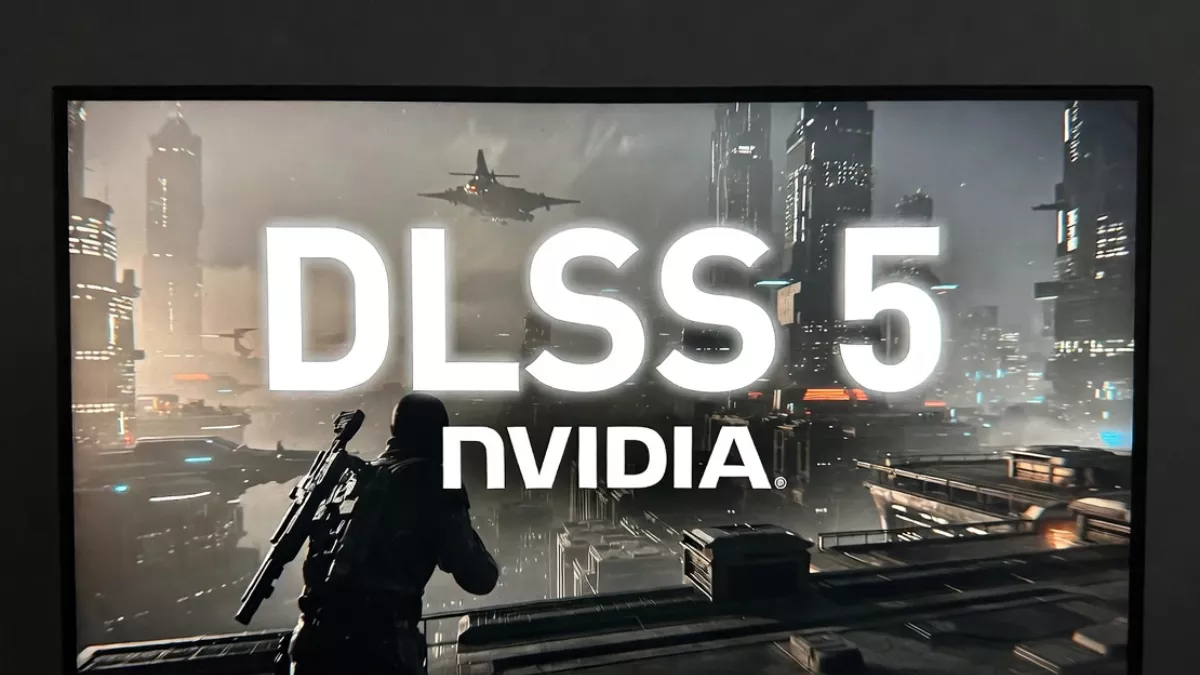
NVIDIA DLSS 5 with real-time neural rendering, photorealistic lighting, AI co-pilot technology announced at GTC 2026 for RTX 50-series GPUs launching Fall 2026
NVIDIA has announced DLSS 5, the company’s latest breakthrough in AI-powered graphics technology at the GTC 2026 conference. Positioned as a paradigm shift from traditional upscaling and frame generation to real-time neural rendering, the new technology emphasizes photorealistic visual fidelity, AI-driven scene reinterpretation, and developer-controlled enhancements that work within the artistic vision of games. DLSS 5 represents a fundamental reimagining of how graphics rendering works, moving beyond cleaning up frames to actually generating visually precise imagery in real-time.
Also Read

Technology Overview and Neural Rendering
NVIDIA DLSS 5 marks a significant departure from previous iterations of Deep Learning Super Sampling technology. While DLSS 1 through 4 focused primarily on upscaling lower-resolution images and generating additional frames to improve performance, DLSS 5 introduces real-time neural rendering as its core capability.
The technology uses deep learning algorithms to reinterpret lighting and material surfaces at a fundamental level, handling complex visual phenomena such as subsurface scattering on human skin, the natural sheen and texture of fabric materials, realistic hair rendering with proper light interaction, and accurate reflection and refraction properties across different surfaces.
NVIDIA describes DLSS 5 as an “AI co-pilot” that can reinterpret scene formation to leapfrog hardware limitations. Rather than simply enhancing existing rendered frames, the technology actively participates in the rendering process itself, using trained neural networks to generate photorealistic lighting and material interactions that would be computationally prohibitive using traditional rasterization or ray tracing techniques alone.
Photorealistic Lighting Capabilities
One of the standout features of DLSS 5 is its ability to generate visually precise imagery through advanced lighting simulation. The technology handles complex light interactions including global illumination effects that simulate how light bounces between surfaces in a scene, caustics rendering for light patterns created by reflection or refraction through transparent or reflective materials, ambient occlusion that darkens corners and crevices where ambient light is blocked, and volumetric lighting for realistic fog, smoke, and atmospheric effects.
These lighting enhancements are computed in real-time using AI inference rather than traditional rendering pipelines, allowing for photorealistic visuals on current hardware that would otherwise require significantly more powerful GPUs using conventional techniques.
Hardware Requirements and Compatibility
DLSS 5 will be a cornerstone feature for NVIDIA’s upcoming RTX 50-series GPUs, which are expected to launch in Fall 2026. These next-generation graphics cards will feature enhanced Tensor Cores specifically optimized for the neural rendering workloads required by DLSS 5.
While DLSS 5 is being marketed primarily for the RTX 50-series, NVIDIA has not yet confirmed whether the technology will be backward compatible with RTX 40-series, RTX 30-series, or earlier RTX graphics cards. The computational requirements for real-time neural rendering suggest that older hardware may struggle to deliver the full DLSS 5 experience, though limited functionality could potentially be supported on previous generation cards.
Developer Control and Artistic Integrity
Understanding concerns about AI overriding artistic vision, NVIDIA has included comprehensive tools for game developers to control how DLSS 5 enhancements are applied. These developer controls include masking systems that allow artists to specify which areas of a scene should receive neural rendering enhancements, grading tools for adjusting the intensity and character of AI-generated lighting effects, artistic override options to ensure the technology respects the intended visual style of the game, and quality presets that balance performance and visual fidelity based on target hardware.
This approach ensures that DLSS 5 acts as an enhancement tool rather than a replacement for developer artistic choices, maintaining the creative vision while providing technical benefits.
Confirmed Games Supporting DLSS 5
NVIDIA has officially confirmed that 16 games will support DLSS 5, with many planned for updates or launches starting in Fall 2026. The confirmed titles include AION 2, a massively multiplayer online role-playing game; Assassin’s Creed Shadows, Ubisoft’s upcoming historical action-adventure entry; Black State, an upcoming tactical shooter; Cinder City, a new urban action game; and Delta Force, the rebooted tactical shooter franchise.
Additional confirmed titles include EA SPORTS FC, which has demonstrated DLSS 5 in technical previews; Hogwarts Legacy, receiving a post-launch update; Justice, an action RPG; Naraka: Bladepoint, the battle royale melee combat game; and NTE: Neverness to Everness, an open-world supernatural RPG.
Further support comes from Phantom Blade Zero, a stylish action game; Resident Evil Requiem, Capcom’s latest survival horror entry; Sea of Remnants, an exploration-focused adventure; Starfield, Bethesda’s space exploration RPG receiving a major visual upgrade; The Elder Scrolls IV: Oblivion Remastered, bringing classic RPG gameplay with modern graphics; and Where Winds Meet, a Chinese martial arts action game.
This diverse lineup demonstrates broad industry adoption across multiple genres, from competitive multiplayer titles to single-player narrative experiences.
Performance Impact and Visual Quality
Early demonstrations of DLSS 5 suggest significant visual improvements while maintaining playable frame rates. The technology is designed to deliver photorealistic lighting effects at resolutions up to 4K in real-time, making previously impossible visual fidelity achievable on consumer hardware.
By offloading complex lighting calculations to AI inference, DLSS 5 can potentially improve performance compared to traditional rendering methods while simultaneously enhancing visual quality, creating a win-win scenario for both performance-focused and graphics-focused gamers.
Market Impact and Adoption Timeline
The announcement of DLSS 5 reinforces NVIDIA’s leadership in AI-accelerated graphics technology. With 16 major titles confirmed at launch and more expected to adopt the technology throughout late 2026 and 2027, DLSS 5 is positioned to become the new standard for high-fidelity gaming visuals.
Game developers adopting DLSS 5 will benefit from reduced development costs for advanced lighting systems, the ability to target higher visual quality without proportional increases in base hardware requirements, and competitive differentiation through cutting-edge graphics technology.
NVIDIA DLSS 5 key features
- Real-time neural rendering replacing traditional upscaling-focused approach
- Photorealistic lighting with AI-powered scene reinterpretation
- Advanced material surface rendering (skin, hair, fabric)
- Subsurface scattering, caustics, global illumination, volumetric effects
- AI co-pilot technology that reinterprets scene formation
- Developer masking and grading tools for artistic control
- Up to 4K resolution support in real-time
- 16 confirmed game titles at announcement
- Optimized for RTX 50-series GPUs
- Launch planned for Fall 2026
- Deep learning algorithms for complex light interactions
- Enhanced Tensor Core utilization
Availability and launch timeline
NVIDIA DLSS 5 will launch alongside the RTX 50-series GPUs in Fall 2026. Game support will begin rolling out with the confirmed titles, with additional games expected to adopt the technology in subsequent updates throughout late 2026 and into 2027.
Future developments
NVIDIA is expected to expand DLSS 5 support to additional titles beyond the initial 16 confirmed games, with widespread adoption anticipated as the RTX 50-series install base grows and development tools mature throughout 2027.