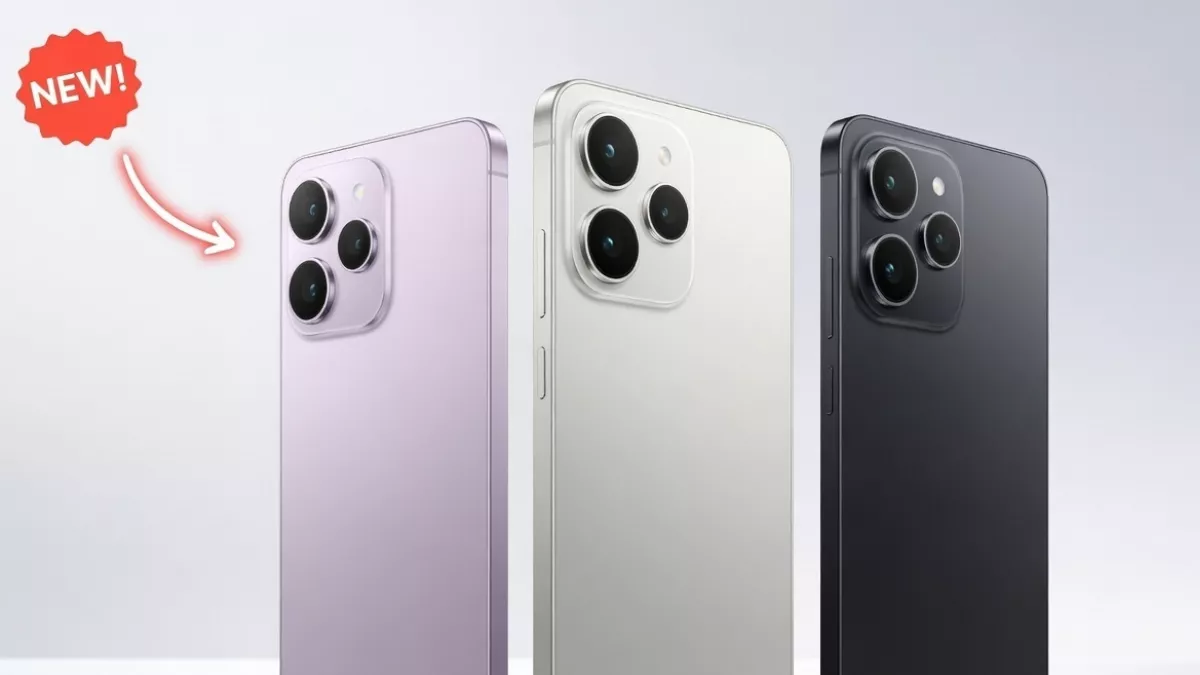
The budget smartphone segment has just witnessed a launch that could redefine expectations for what Rs. 18,999 can deliver. Redmi Note 14 Unveiled at Rs. 18,999 with 120Hz OLED Display and Dimensity 7025-Ultra Power represents Xiaomi’s Redmi brand doubling down on its value-for-money legacy. In a price bracket traditionally dominated by compromises and incremental upgrades, the Note 14 arrives with specifications that blur the lines between budget and mid-range categories.
Redmi’s Note series has built a reputation over the years as the go-to choice for buyers seeking reliable performance and good features without breaking the bank. The Note 14 continues this tradition while pushing the envelope further with a premium OLED display and a capable processor that promises smooth everyday performance.
Also Read




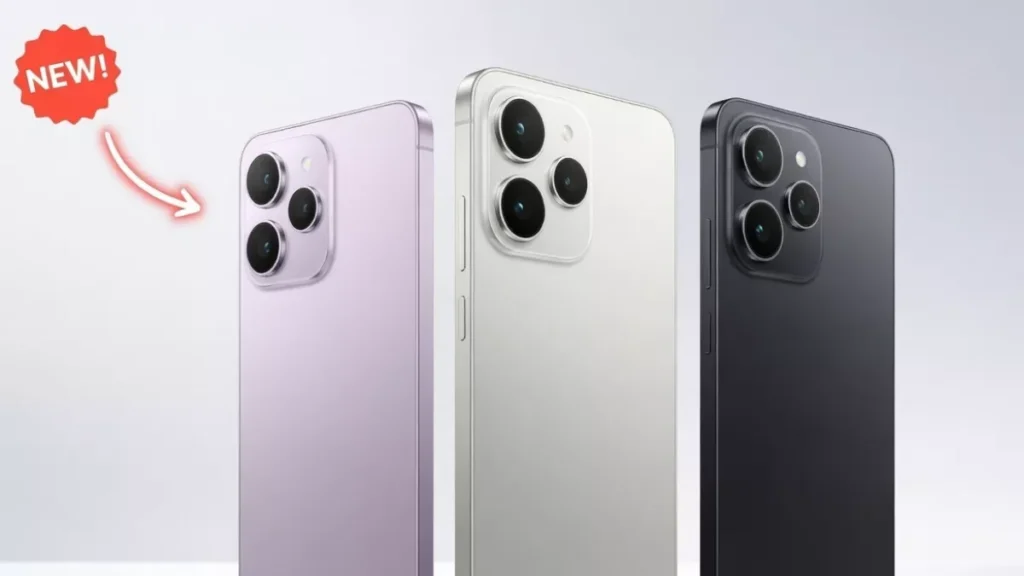
At Rs. 18,999, this device positions itself as a sweet spot offering for students, first-time buyers, and anyone seeking substantial value from their smartphone investment.
120Hz OLED Display: Premium Visual Experience
The standout feature of the Redmi Note 14 is undoubtedly its 120Hz OLED display—a specification typically reserved for devices costing significantly more. This isn’t just a marketing checkbox; it represents a genuine upgrade in daily user experience that transforms how the phone feels to use.
OLED technology brings multiple advantages over traditional LCD panels. Each pixel emits its own light, enabling true blacks when pixels are turned off completely. This creates stunning contrast ratios and vibrant colors that make content consumption genuinely enjoyable. Whether watching movies on Netflix, scrolling through Instagram, or playing games, the OLED panel delivers visuals that punch well above the phone’s price class.
The 120Hz refresh rate doubles the smoothness of standard 60Hz displays. Every swipe, scroll, and animation flows with fluidity that makes the interface feel responsive and premium. Once you experience 120Hz scrolling through social media feeds or web pages, returning to 60Hz feels noticeably sluggish. This isn’t subtle—it’s an improvement that every user notices immediately.
For gamers, the 120Hz refresh rate enables supported games to run at higher frame rates, providing smoother motion and more responsive controls. Titles that support high refresh rates benefit from reduced motion blur and improved visual clarity during fast-paced action.
The display size is expected to be around 6.67 inches, providing generous screen real estate for productivity and entertainment without making the phone unwieldy. Full HD+ resolution ensures sharp text and detailed images across all content types.
Peak brightness levels likely exceed 1000 nits, ensuring comfortable visibility even in direct sunlight. HDR10+ support enhances compatible content with improved dynamic range, making supported videos and shows appear more lifelike with better highlight and shadow detail.
Dimensity 7025-Ultra: Efficient Performance
Powering the Redmi Note 14 is MediaTek’s Dimensity 7025-Ultra processor, a chipset designed specifically to deliver balanced performance and power efficiency in the budget-to-mid-range segment. While it may not carry the flagship cachet of premium processors, the Dimensity 7025-Ultra is engineered to handle everyday tasks smoothly while maintaining reasonable battery consumption.
Built on an efficient manufacturing process, the processor features a multi-core architecture that allocates tasks intelligently between performance and efficiency cores. Heavy applications and games utilize the powerful cores for maximum speed, while routine tasks like messaging, web browsing, and music playback run on efficiency cores to preserve battery life.
The integrated Mali GPU handles graphics duties competently, enabling popular mobile games like BGMI, Free Fire, Call of Duty Mobile, and casual titles to run smoothly at medium to high settings. While not targeting hardcore gaming enthusiasts, the GPU provides adequate performance for the vast majority of users who engage in casual to moderate gaming.
AI processing capabilities built into the Dimensity 7025-Ultra enhance various aspects of the user experience. Camera performance benefits from AI scene detection and computational photography improvements. Battery management becomes smarter through usage pattern learning. Even routine tasks see optimization through intelligent resource allocation.
5G connectivity support future-proofs the device as network infrastructure continues expanding across India. The modem supports multiple 5G bands, ensuring compatibility with different carriers and maximizing coverage possibilities. Dual 5G standby capability allows both SIM cards to access 5G networks, providing flexibility for users managing personal and work numbers.
For everyday users who primarily browse social media, stream videos, navigate with maps, use messaging apps, and handle productivity tasks, the Dimensity 7025-Ultra provides smooth, lag-free performance that meets expectations without unnecessary overkill.
Camera System: Versatile Photography
The Redmi Note 14’s camera setup aims to deliver versatile photography capabilities suitable for a wide range of scenarios. While budget devices cannot match flagship camera systems, modern sensors and software processing enable surprisingly capable results when used properly.
The primary camera is expected to feature a 50MP or higher resolution sensor, likely with a reasonably large pixel size for improved light gathering. This sensor handles the majority of photography duties, capturing detailed images in good lighting and respectable results in moderate low-light conditions.
AI enhancements play a crucial role in optimizing photos automatically. Scene detection identifies what you’re photographing—food, landscapes, portraits, pets, sunsets—and adjusts camera settings accordingly to produce more appealing results. For users who don’t want to manually tweak settings, AI assistance ensures better output with minimal effort.
Portrait mode utilizes depth sensing to create professional-looking photos with blurred backgrounds, making subjects stand out. Edge detection has improved significantly in recent budget devices, and the Note 14 likely continues this trend with clean subject separation and natural-looking bokeh effects.
An ultra-wide camera expands creative possibilities, capturing expansive landscapes, architectural shots, or group photos where fitting everyone in frame matters. The field of view, typically around 118-120 degrees, significantly exceeds what the primary camera can capture.
A macro sensor enables close-up photography of small objects, flowers, insects, or textures. While macro cameras in budget devices often produce modest results, they add creative versatility for users who enjoy experimental photography.
The front camera, likely 16MP or higher, handles selfies and video calls competently. Beauty modes and filters provide customization options, while portrait mode for selfies creates flattering images with background blur.
Night mode leverages multi-frame processing to combine several exposures, producing brighter, clearer low-light photos than single-shot methods. While results won’t match flagship night photography, the improvement over basic low-light shots is substantial.
Video recording capabilities include 1080p at 30fps/60fps with electronic stabilization. Some budget devices in this range have begun offering 4K recording, and if the Note 14 includes this feature, it adds significant value for content creators and vloggers.
Design and Build Quality
Redmi typically emphasizes practical, attractive designs that appeal to mainstream buyers. The Note 14 is expected to feature a modern aesthetic with minimal bezels, a punch-hole or centered hole-punch cutout for the front camera, and a sleek back panel design.
Build quality strikes a balance between premium feel and cost management. A glass or premium plastic back panel provides an upscale appearance while keeping weight reasonable. Gorilla Glass protection on the front safeguards against scratches and minor drops.
The device likely weighs around 190-200 grams with thickness between 7.5-8.5mm, making it comfortable to hold and use for extended periods. Weight distribution matters for one-handed usage and general comfort, and Redmi’s design team typically pays attention to ergonomics.
Color options usually include multiple attractive variants—expect choices ranging from subtle, professional finishes to bold, eye-catching gradients that appeal to younger buyers seeking devices that stand out.
An IP rating for water and dust resistance would be a welcome addition, though not always expected at this price point. Even basic splash resistance enhances durability and peace of mind during everyday use.
Side-mounted fingerprint sensors or in-display fingerprint recognition provides convenient biometric authentication. Face unlock offers an alternative for users who prefer that authentication method.
Battery Life and Charging
Battery capacity is expected to be around 5000mAh, which has become standard in this segment. Combined with the Dimensity 7025-Ultra’s efficiency and OLED display’s power-saving advantages (OLED consumes less power when displaying darker content), the Note 14 should deliver a full day of moderate to heavy usage.
Charging speeds likely range from 33W to 45W fast charging, enabling reasonably quick top-ups. While not matching the extreme charging speeds of premium devices, 33W can still charge the phone from empty to 50% in approximately 30 minutes, which suffices for most users’ daily needs.
Battery optimization features in MIUI (Xiaomi’s custom Android skin) include adaptive battery management that learns usage patterns and intelligently manages background processes. This extends battery life by preventing unnecessary battery drain from apps you rarely use.
Power-saving modes provide additional runtime when battery levels run low, reducing performance and limiting background activities to squeeze extra hours from remaining charge.
Software Experience: MIUI Features and Updates
The Redmi Note 14 runs MIUI, Xiaomi’s feature-rich custom Android interface. MIUI has evolved significantly over the years, offering extensive customization options, useful features, and regular improvements.
MIUI includes themes engine allowing complete interface customization—change icons, wallpapers, fonts, sounds, and overall visual style to match personal preferences. The theme store offers thousands of free and paid options.
Practical features like Second Space create separate user profiles on one device, useful for separating work and personal content or sharing the device with family members while maintaining privacy.
Game Turbo mode optimizes system resources for gaming, blocking notifications, enhancing touch response, and monitoring performance metrics. This caters to users who game regularly and want dedicated gaming features.
Security features include app lock, private folders for sensitive files, and various privacy controls that give users granular control over app permissions and data access.
The update situation with MIUI typically includes one or two major Android version updates plus security patches for several years. While not matching flagship update commitments, it provides reasonable longevity for a budget device.
Some users appreciate MIUI’s feature density, while others prefer cleaner, more minimal interfaces. Pre-installed apps and bloatware have been concerns in past MIUI versions, though Xiaomi has made efforts to reduce unnecessary pre-loaded software in recent releases.
Memory and Storage Options
The Redmi Note 14 likely offers multiple configurations to accommodate different budgets and usage needs. Expect variants starting at 6GB RAM with 128GB storage, extending to 8GB RAM with 256GB storage for users requiring more capacity.
6GB RAM handles everyday multitasking adequately for typical users who run standard apps and engage in light to moderate usage. The 8GB option provides additional headroom for heavier multitasking or users who like keeping many apps active simultaneously.
LPDDR4X RAM technology ensures efficient performance and battery usage. While not the absolute latest LPDDR5, LPDDR4X provides excellent balance between performance and cost in this price segment.
UFS 2.2 storage delivers respectable read and write speeds for app loading, file transfers, and general system responsiveness. While UFS 3.1 would be faster, UFS 2.2 still represents significant improvement over older eMMC storage found in entry-level devices.
RAM expansion features, increasingly common in budget devices, allow the system to use a portion of internal storage as virtual RAM. This extends effective memory beyond physical RAM, helping maintain smooth performance when running multiple apps.
MicroSD card support for storage expansion would benefit users who store large amounts of photos, videos, and music locally. Many budget buyers appreciate expandable storage as it delays the need to upgrade to higher storage variants.
Connectivity and Additional Features
Modern connectivity features ensure the Note 14 integrates smoothly into users’ digital lives. Dual 5G support, Wi-Fi 6 capability, Bluetooth 5.3 for connecting wireless accessories, and various sensors complete the connectivity package.
NFC support, if included, enables contactless payments through services like Google Pay, making transactions convenient without carrying physical cards. NFC adoption is growing in India, making this feature increasingly valuable.
A 3.5mm headphone jack would appeal to users who prefer wired audio or already own favorite wired headphones. While many premium devices have eliminated headphone jacks, budget devices often retain them, recognizing that not all users have transitioned to wireless audio.
Stereo speakers enhance media consumption, providing better sound quality for videos, music, and games compared to single bottom-firing speakers. Even if not exceptionally loud, stereo separation improves the audio experience noticeably.
IR blaster functionality, if present, transforms the phone into a universal remote control for TVs, air conditioners, and other infrared-controlled appliances—a practical feature that increases the device’s utility in daily life.
Target Audience and Use Cases
The Redmi Note 14 at Rs. 18,999 specifically targets budget-conscious buyers who refuse to compromise on essential features like display quality and smooth performance. Students represent a core demographic—the combination of premium OLED display, capable processor, and reasonable pricing aligns perfectly with student budgets and usage patterns.
First-time smartphone buyers or users upgrading from very basic devices will notice dramatic improvements across all aspects of the experience. The OLED display alone represents a transformative upgrade from basic LCD screens.
Families looking for reliable devices for multiple members find value in the Note 14’s balanced feature set. It’s capable enough for varied usage patterns—from teenage social media enthusiasts to parents managing work communications—without costing premium prices.
Content consumers who spend significant time watching videos, browsing social media, or reading on their phones will particularly appreciate the OLED display’s superior visual quality. The viewing experience rivals devices costing considerably more.
Casual to moderate mobile gamers seeking decent gaming performance without investing in gaming-specific phones find adequate capability in the Dimensity 7025-Ultra processor. While not targeting hardcore gamers, it handles popular titles smoothly enough to satisfy most players.
Competitive Landscape
The Rs. 18,999 price point places the Note 14 squarely in one of the most competitive segments of the Indian smartphone market. Competing devices from Realme, Samsung, Motorola, and others vie for buyer attention with various feature combinations.
The Note 14 differentiates itself primarily through the 120Hz OLED display—a premium feature not universally available at this price. Competitors may offer other advantages like faster charging or different processor choices, but the display quality creates strong differentiation.
Xiaomi’s established brand presence and extensive service network across India provide additional value beyond specifications. Easy access to service centers and readily available spare parts matter to buyers considering long-term ownership.
The Redmi Note series’ reputation for reliability and consistent software updates (relative to some competitors) also factors into purchasing decisions. Brand trust influences choices, especially when specifications appear similar across multiple devices.
Value Proposition at Rs. 18,999
Assessing the Note 14’s value requires examining what buyers receive for their Rs. 18,999 investment. The 120Hz OLED display alone justifies significant portion of the price—this specification typically appears in devices costing Rs. 25,000 or more. Getting it at Rs. 18,999 represents genuine value.
The Dimensity 7025-Ultra provides adequate performance for target users without unnecessary overkill. While not the fastest processor available, it matches the actual needs of typical buyers in this segment better than underpowered alternatives.
5G connectivity future-proofs the investment as network infrastructure expands. Buyers won’t face obsolescence when 5G becomes widely available in their areas, extending the device’s useful lifespan.
Camera capabilities, while not flagship-level, meet the needs of social media sharing, casual photography, and everyday documentation. Most budget buyers prioritize display and performance over cutting-edge camera technology, and the Note 14 allocates resources accordingly.
The overall package—display, processor, cameras, battery, design—creates a cohesive experience that feels balanced rather than lopsided toward one or two specifications at the expense of everything else.
Final Thoughts
The Redmi Note 14 unveiled at Rs. 18,999 with 120Hz OLED display and Dimensity 7025-Ultra power represents Xiaomi’s continued commitment to delivering maximum value in the budget segment. By focusing on features that tangibly improve daily user experience—particularly the premium display—Redmi has created a device that feels more expensive than its price tag suggests.
The 120Hz OLED display stands as the headline feature, and rightfully so. This single specification transforms how the phone feels to use, elevating everyday interactions from functional to genuinely enjoyable. Combined with competent processing power, decent cameras, and reliable battery life, the Note 14 covers essential bases without glaring weaknesses.
Of course, real-world performance will ultimately determine the device’s success. Display quality under various lighting conditions, actual battery life with mixed usage patterns, camera performance in challenging scenarios, and long-term software support all require validation through extended user experiences.
However, based on Redmi’s established track record with the Note series and the compelling feature set at Rs. 18,999, there’s solid foundation for optimism. The Note 14 won’t satisfy everyone—photography enthusiasts might seek better cameras, power users might prefer faster processors, and brand-conscious buyers might gravitate toward premium names—but for its target audience of value-conscious buyers seeking well-rounded devices, this launch delivers exactly what matters most.
For students, first-time buyers, and anyone seeking maximum features at minimal cost, the Redmi Note 14 deserves serious consideration. It represents the continuing evolution of budget smartphones from adequate compromises to genuinely capable devices that don’t force users to settle. Whether it becomes the default recommendation in its price segment depends on real-world reviews, but the initial specifications suggest Redmi has once again raised the bar for what Rs. 18,999 can deliver.